
Cayknight
Onboarding
B2C
IoT
AI-Driven, Pet Tech, Smart Wearable
CayKnight.AI is an AI-powered pet health platform that combines a smart collar with a mobile app to monitor dogs’ real-time biometrics, assess overall wellness, and provide early diagnostic insights. I designed an end-to-end onboarding experience that helps dog owners confidently set up, fit, and calibrate the smart collar through illustrated guidance, real-time fit feedback, and movement calibration flows.
Background
Dogs can’t speak, often leaving owners uncertain about their health and missing the right moment to act when something is wrong.

CayKnight.AI combines a smart collar with an AI-driven health app to track a dog’s real-time biometrics, assess overall wellness, and provide early diagnostic insights.

Problem Statement
Many dog owners struggle with the initial setup — they don’t know how to properly connect the collar or fit it on their dog.
More than half of participants struggled with the issue during our early prototype testing.

Incorrect collar setup leads to unreliable biometric detection.

Without accurate data, core features like Health Report can’t provide meaningful insights.
How Might We
How might we enable dog owners to quickly provide basic information, and confidently set up and fit the smart collar—without confusion or frustration?

Solution
Design an onboarding flow that helps dog owners:

1.Create a basic profile for their dog.

2. Connect the smart collar to the app correctly.

3. Calibrate baseline movement data.
Design Solution
Collar Fit

Before
Usability Testing Feedback

Users are still confused about how to put the collar on properly.

They also want clear feedback and instructions that confirm correct placement—and guidance on how to adjust it when it’s fitted incorrectly.
Added Guide

After
Added Feedback

Incorrect placement

Slight misalignment

Proper fit

Hardware & Engineering Research
Research Deep-Dive

I collaborated with hardware engineers to understand how sensor angle, collar orientation, and fit tightness impact biometric accuracy.
Implementation Plan

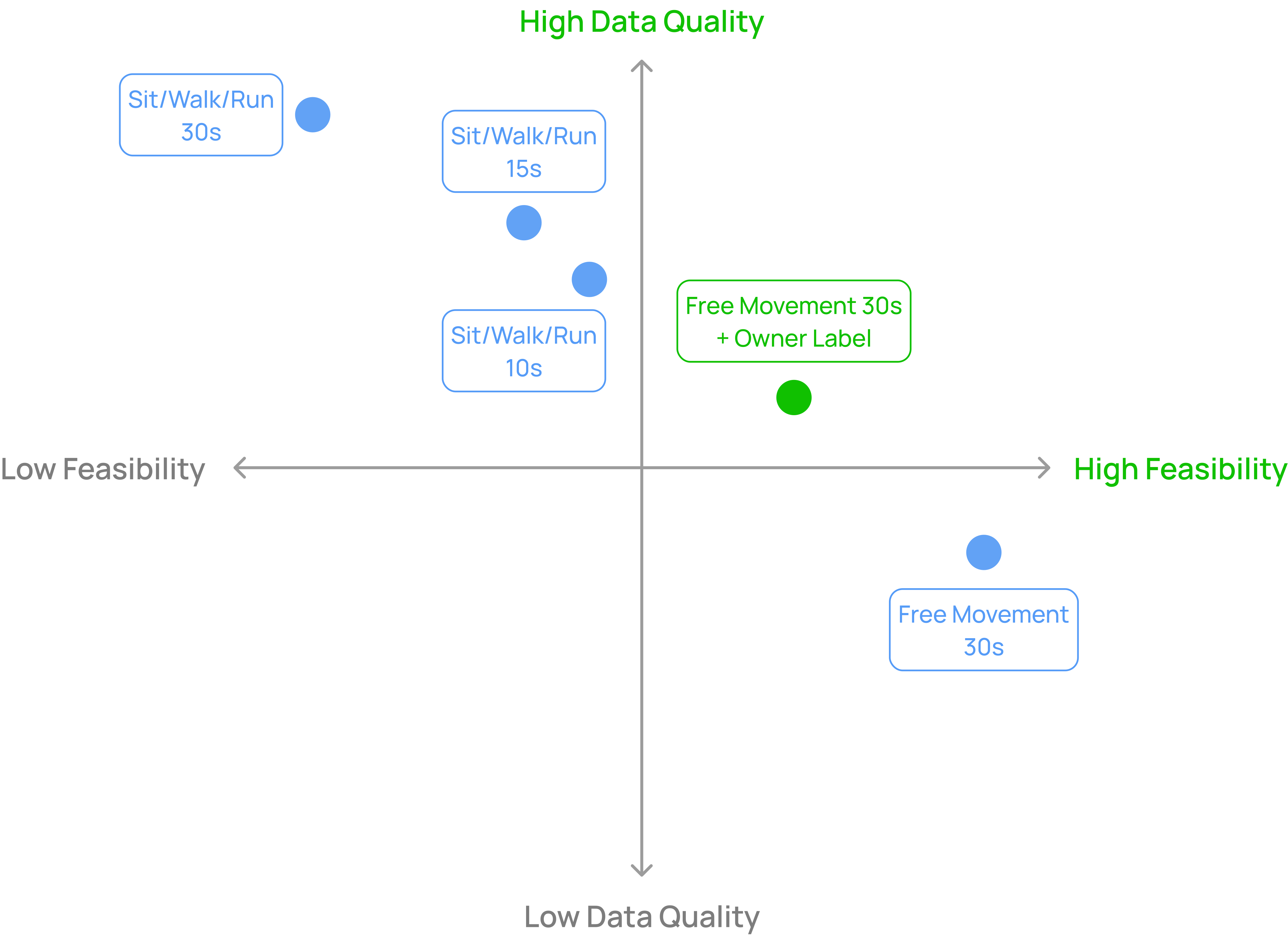
Together, we defined the calibration requirements needed for stable detection, including a 30-second sit, walk, and run motion sequence.

Usability Testing Feedback

30-second calibration is too long for most dogs.

No feedback when the dog performs the wrong behavior.

Before
After
Engineering Perspective

Needs clean, reliable sensor data
Ideal: sit / walk / run for 15 seconds each
Dog Reality

Can’t stay in one behavior that long
Easily distracted (sniffing, wandering, sudden moves)

Alternatives Exploration
We chose 30-second free movement with owner labeling.

Before
After

